Hamlet Review Film to Be or Not to Be
'To be or not to exist, that is the question'is the almost famous soliloquy in the works of Shakespeare – quite possibly the most famous soliloquy in literature. Read Village'southward famous soliloquy below with a modernistic translation and total caption of the pregnant of 'To be or not to exist'. We've also pulled together a bunch of usually asked questions about Hamlet's famous soliloquy, and have a couple of top performances of the soliloquy to picket.
Jump to section: Full soliloquy | Analysis | Performances | FAQs | Concluding read
Allow's first with a read-through of Shakespeare's original lines:
Hamlet's 'To Be Or Not To Be' Speech, Deed 3 Scene 1
To be, or non to be: that is the question:
Whether 'tis nobler in the listen to endure
The slings and arrows of outrageous fortune,
Or to have arms against a bounding main of troubles,
And by opposing cease them? To die: to sleep;
No more; and by a sleep to say we end
The heart-ache and the m natural shocks
That flesh is heir to, 'tis a consummation
Devoutly to be wish'd. To die, to slumber;
To sleep: possibly to dream: ay, at that place's the rub;
For in that sleep of death what dreams may come
When nosotros accept shuffled off this mortal coil,
Must give us pause: there'due south the respect
That makes calamity of and then long life;
For who would bear the whips and scorns of fourth dimension,
The oppressor'southward wrong, the proud human'due south contumely,
The pangs of despised beloved, the police force's delay,
The insolence of part and the spurns
That patient merit of the unworthy takes,
When he himself might his quietus make
With a bare bodkin? who would fardels carry,
To grunt and sweat under a weary life,
Merely that the dread of something later death,
The undiscover'd country from whose bourn
No traveller returns, puzzles the will
And makes us rather bear those ills we have
Than fly to others that we know not of?
Thus censor does make cowards of the states all;
And thus the native hue of resolution
Is sicklied o'er with the pale cast of idea,
And enterprises of great pith and moment
With this regard their currents turn awry,
And lose the proper name of activity.–Soft you now!
The fair Ophelia! Nymph, in thy orisons
Be all my sins remember'd.
Hamlet 'To Be Or Not To Be' Analysis
TL:DR
Village is thinking about life and expiry. Information technology is the great question that Hamlet is asking nearly human existence in full general and his own existence in particular – a reflection on whether information technology's better to be alive or to be dead.
The in-depth version
The first six words of the soliloquy establish a balance. There is a directly opposition – to exist, or not to be. Hamlet is thinking about life and death and pondering a state of being versus a country of not being – being alive and being expressionless.
The residual continues with a consideration of the way 1 deals with life and decease. Life is a lack of power: the living are at the mercy of the blows of outrageous fortune. The only activity 1 tin can take against the things he lists among those blows is to end i'south life. That'southward the just manner of opposing them. The 'sleep of death' is therefore empowering: killing oneself is a fashion of taking action, taking upwardly arms, opposing and defeating the slings and arrows of outrageous fortune. Living is a passive country; dying is an active country. But in gild to reach the condition of death one has to take action in life – charge fully armed against Fortune – so the whole proposition is circular and hopeless because ane does not really have the power of action in life.
Expiry is something desirable – devoutly to exist wished, a consummation – a perfect closure. It's nothing more than a sleep. But there'south a catch, which Hamlet calls a rub. A 'rub' is a bowls term meaning an obstacle on the bowls lawn that diverts the basin, so the fear of the life future is the obstruction that makes us pause and perhaps change the direction of our thinking. We don't control our dreams so what dreams may come up in that sleep in which we accept shuffled off all the fuss and bother of life? He uses the term 'mortal scroll,' which is an Elizabethan give-and-take for a big fuss, such equally there may be in the preparations for a party or a wedding – a lot of things going on and a lot of rushing about. With that thought, Hamlet stops to reconsider. What will happen when nosotros have discarded all the hustle and bustle of life? The problem with the proposition is that the sleep of death is unknown and could be worse than life.
And now Hamlet reflects on a final cease. A 'quietus' is a legal word significant a last definitive end to an argument. He opposes this Latin word against the Celtic 'sweating' and 'grunting' of a living person as an Arab beneath an overwhelmingly heavy load – a fardel, the load carried by a camel. Who would comport that when he could only draw a line under life with something as elementary as a knitting needle – a bodkin? It'south quite a large idea and it's fascinating that this enormous deed – drawing a line under life – can be done with something every bit uncomplicated every bit a knitting needle. And how piece of cake that seems.
Village at present lets his imagination wander on the field of study of the voyages of discovery and the exploratory expeditions. Dying is like crossing the border between known and unknown geography. 1 is likely to be lost in that unmapped place, from which one would never return. The implication is that there may be unimagined horrors in that land.
Village now seems to make a decision. He makes the profound judgment that 'censor does make cowards of united states of america all,' This judgement is probably the most of import one in the soliloquy. There is a religious dimension to it as information technology is a sin to take i'south life. So with that added dimension, the fear of the unknown after decease is intensified.
Just there is more than to it than that. Information technology is not just about killing himself but also about the mission he is on – to avenge his begetter'southward expiry by killing his father's murderer. Throughout the action of the play, he makes excuses for non killing him and turns abroad when he has the risk. 'Conscience does make cowards of us all.' Convention demands that he kill Claudius but murder is a sin and that disharmonize is the cadre of the play.
At the end of the soliloquy, he pulls himself out of this reflective style by deciding that besides much thinking about it is the thing that will forbid the activity he has to rise to.
This is not entirely a moment of possible suicide. It'due south not that he's contemplating suicide every bit much as reflecting on life, and we find that theme all through the text. In this soliloquy, life is burdensome and devoid of power. In another, information technology'due south 'weary, dried, flat and unprofitable,' like a garden overrun with weeds. In this soliloquy, Hamlet gives a listing of all the things that annoy him about life: the whips and scorns of time, the oppressor'south incorrect, the proud man's contumely, the pangs of despised dearest, the law's delay, the insolence of office and the spurns tchapeau patient merit of the unworthy takes. Merely there's a sense of aching frustration in this soliloquy that however bad life is we're prevented from doing anything about it past fear of the unknown.
Spotter Two Theatre Greats Recite Hamlet's Soliloquy
David Tenant as Hamlet in the RSC'due south 2009 Hamlet production:
We couldn't resist but share Patrick Stewart'southward comedy take on the soliloquy for Sesame Street!
Commonly Asked Questions About 'To Be Or Non To Be'
Why is Village'south 'To be or non to exist' speech so famous?
This is partly because the opening words are so interesting, memorable and intriguing, but also considering Shakespeare ranges around several cultures and practices to infringe the language for his images. Simply look at how many now-famous phrases are used in the spoken communication – 'take arms', 'what dreams may come up', 'sea of troubles', 'to slumber perchance to dream'. 'sleep of death', 'whether tis nobler', 'flesh is heir', 'must give us pause', 'mortal coil', 'endure the slings and arrows', outrageous fortune', 'the insolence of office'… the listing goes on and on.
Add to this the fact that Shakespeare is dealing with profound concepts, putting complex philosophical ideas into the mouth of a character on a stage, and communicating with an audience with a wide range of educational levels, and you accept a selection of reasons equally to why this soliloquy is as famous equally it is. But look at how many now phrases
How long is 'To be or not to exist'?
The 'To be or not to be' soliloquy is 33 lines long, and consists of 262 words. Hamlet, the play in which 'to be or not to be' occurs is Shakespeare's longest play with four,042 lines. It takes four hours to performVillage on the phase, with the 'to be or not to be' soliloquy taking anywhere from 2 to iv minutes.
Why is 'To be or not to be' so important?
'To be or not to exist' is not important in itself but information technology has gained tremendous significance in that it is perhaps the most famous phrase in all the words of the playwright considered to exist the greatest writer in the English language language. It is as well significant in the play,Hamlet, itself in that information technology goes directly to the centre of the play's meaning.
Why does Hamlet say 'To be or non to be'?
To be or not to be' is a soliloquy of Hamlet'south – meaning that although he is speaking aloud to the audience none of the other characters tin can hear him. Soliloquies were a convention of Elizabethan plays where characters spoke their thoughts to the audition. Hamlet says 'To be or non to be' because he is questioning the value of life and asking himself whether it'southward worthwhile hanging in there. He is extremely depressed at this indicate and fed up with everything in the world around him, and he is contemplating putting an cease to himself.
Is 'To be or not to be' a metaphor?
The line 'To be or non to be' is very straightforward and direct, and has no metaphorical attribute at all. Information technology'southward a simple statement made upwards of v ii-letter words and i of 3 – information technology'due south then simple that a child in the early stages of learning to read can read it. Together with the sentence that follows it – 'that is the question – it is a simple question virtually human being. The rest of the soliloquy goes on to use a number of metaphors.
What is Shakespeare saying in 'To be or non to be'?
In the 'To be or not be to' soliloquy Shakespeare has his Hamlet character speak theses famous lines. Hamlet is wondering whether he should continue to exist, meaning to exist or remain alive, or to not exist – in other words, commit suicide. His thoughts well-nigh that develop in the rest of the soliloquy.
Why is 'To exist or not to be' so memorable?
Ask people to quote a line of Shakespeare and by and large information technology'southward 'To exist or not to be' that's mentioned. So merely what is it that makes this line of Shakespeare's then memorable?
The line is what is known as a chiasmus because of its residual and structure, and that's what makes it memorable. Look at this chiasmus from John F Kennedy: 'Do non ask what your country tin do for you; enquire what y'all can do for your state.' Far more complex than Shakespeare'due south line just fifty-fifty so, having heard information technology i could never forget it. The first and second halves mirror each other, the second being an inversion of the first. Winston Churchill'southward speeches are total of chiasma. Even when he is joking they menses: 'All babies look like me, but then I look like all babies.'
Chiasma are always short and snappy and say a lot in their repetition of words and their balance. And and so information technology is with Hamlet'due south speech that starts 'to exist or not to be', arguably Shakespeare's most memorable line – in the commonage censor centuries after the words were written and performed.
Wait at the rest of the line. Information technology has merely four words: 'to,' 'be,' 'or' and 'not.' The fact is that the linguistic communication is every bit elementary as language can become but the ideas are extremely profound. 'To take arms against a sea of troubles,' for case, and 'To dice, to sleep, no more, but in that slumber of death what dreams may come up,' every word but one monosyllabic, go right to the heart of homo existence and the deepest dilemmas of life.
Allow'due south attempt reading information technology once again…
If yous're still with the states, you lot should now have a pretty good understanding of the true significant behind the words of Village's 'To exist or non to be' spoken language. Yous may have also watched two fantastic actors speak the immortal words, so should have a much clearer understanding of what messages the soliloquy is trying to convey.
With all of this in heed, why not try reading the words aloud to yourself one more time:
To be, or non to be, that is the question:
Whether 'tis nobler in the heed to suffer
The slings and arrows of outrageous fortune,
Or to take arms confronting a bounding main of troubles
And by opposing end them. To die—to sleep,
No more than; and by a slumber to say we finish
The eye-ache and the thou natural shocks
That flesh is heir to: 'tis a consummation
Devoutly to be wish'd. To die, to slumber;
To sleep, maybe to dream—ay, there's the rub:
For in that slumber of expiry what dreams may come up,
When nosotros have shuffled off this mortal coil,
Must requite us pause—there's the respect
That makes calamity of so long life.
For who would bear the whips and scorns of fourth dimension,
Th'oppressor's wrong, the proud human being's contumely,
The pangs of dispriz'd love, the constabulary's delay,
The insolence of office, and the spurns
That patient merit of thursday'unworthy takes,
When he himself might his quietus make
With a bare bodkin? Who would fardels carry,
To grunt and sweat under a weary life,
But that the dread of something after decease,
The undiscovere'd land, from whose bourn
No traveller returns, puzzles the will,
And makes us rather carry those ills nosotros have
Than fly to others that nosotros know not of?
Thus conscience does make cowards of usa all,
And thus the native hue of resolution
Is sicklied o'er with the pale cast of thought,
And enterprises of great pitch and moment
With this regard their currents turn awry
And lose the name of action.
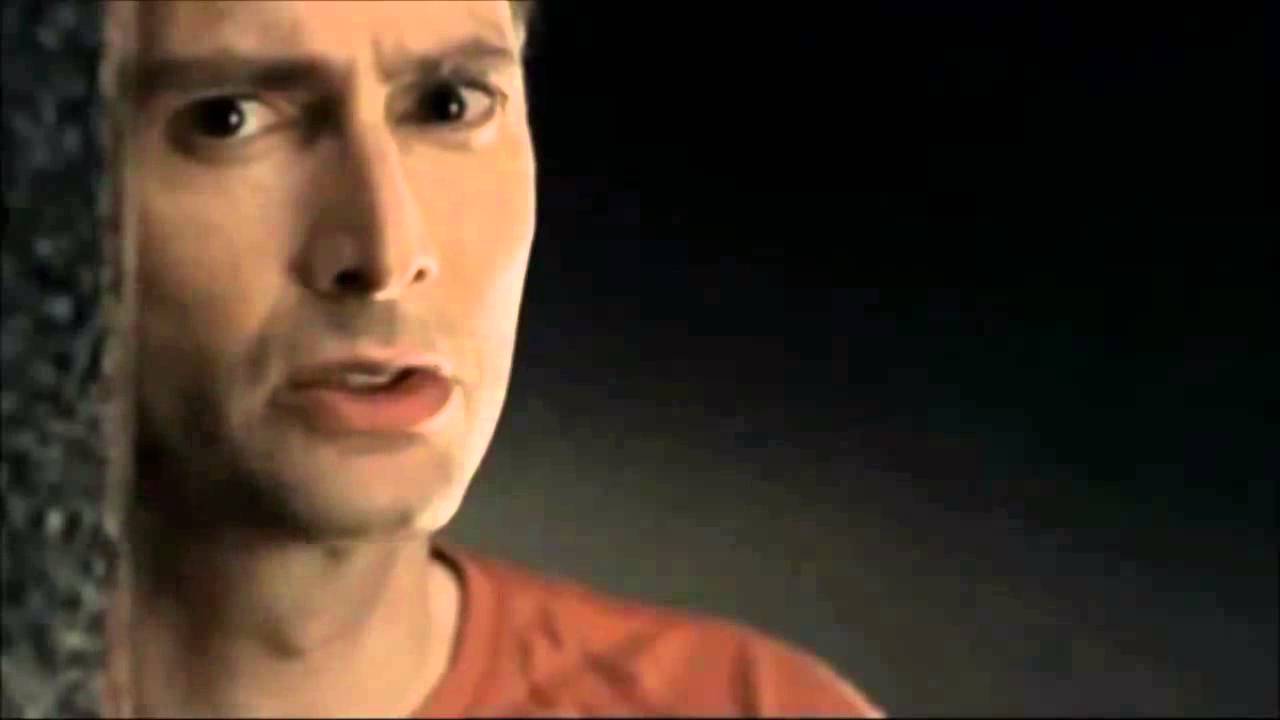
David Tennant speaks Hamlet'southward 'To be or not to be' soliloquy
And that'due south all for this take on Hamlet's immortal lines. Did this page help you? Whatever information we're missing that would be useful? Delight practise let us know in the comments section beneath!
Source: https://nosweatshakespeare.com/quotes/soliloquies/to-be-or-not-to-be/

Post a Comment for "Hamlet Review Film to Be or Not to Be"